
2 min read
Advancing Victims’ Rights in Georgia: How Marsy’s Law and GOVS Support Survivors and Families
Marsy's Law for Georgia Mar 25, 2026
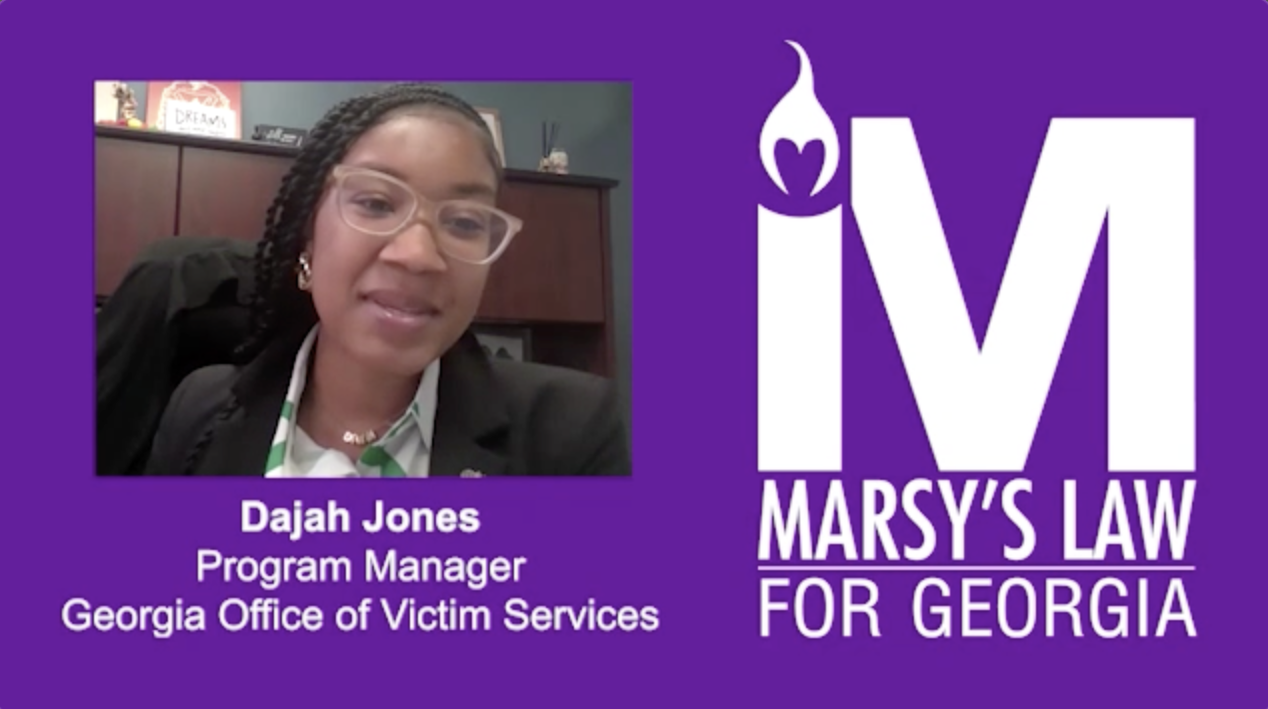
As we approach National Crime Victims’ Rights Week (April 19-25), Marsy’s Law for Georgia would like to spotlight a boots-on-the-ground victim services advocate, Dajah Jones, who takes the time to listen to crime victims and walks them through the necessary steps of navigating the judicial system. For five years, Dajah Jones has been the Georgia Office of Victim Services’ (GOVS) program manager, overseeing the office’s various programs. Many of these programs revolve around giving crime victims and their loved ones agency, continued support, and closure.
Although the GOVS department officially uses the term “victim,” they understand that the effects of crime can be far-reaching. Services are available not only to those directly impacted but also to family members, friends, witnesses, attorneys, advocates, and community members.
Marsy’s Law for Georgia and Jones’ office both offer resources to support victims’ safety and their right to knowledge about — and involvement in — their own cases or the cases of their loved ones, something that Jones appreciates.
“Marsy’s Law for Georgia is really one of the reasons why our office exists, because we are able to notify victims based on that law, and it has made a difference, making sure that victims’ voices are heard, whether it’s through our processes, our victim impact sessions, or our victim dialogue programs,” Jones says.
The Georgia Office of Victim Services’ Victim Information Program (V.I.P) is one such program that is a direct reflection of Marsy’s Law for Georgia, in which victims can register to be notified if there are changes or updates in their offender’s status — a right to information that Marsy’s Law for Georgia provides. According to Jones, however, their office is actively working to take a step even further by reaching out to victims who might not be aware of the services GOVS has to offer, or even its existence.
“Before victims’ rights really became popular within our communities, a lot of people didn’t know that they had the ability to ride into our office and just be notified about their offenders,” Jones recalls about her early years with GOVS. “I first started working on that project when I first got to the Office of Victim Services, and I was able to locate a case that was over 20 years old, and the victim never knew about us.”
Jones went on to confirm that the victim had registered with their office and continues to maintain contact with them. Since registering with GOVS, that person has been able to keep track of their offender; when they are scheduled for release, or whether they are eligible for parole; offer their input for parole consideration; make a safety plan; or request special conditions in the event of the offender’s release.
While it offers many great services and programs, the Georgia Office of Victim Services is still not a commonly known resource for victims.
“We’re working to make sure that people know that it doesn’t just end at the sentencing stage. There are things that come afterwards, especially when it comes to parole. People are released back onto the streets, so just making sure that their voices are heard and they are cared about, that we value their safety — we value their voices.”
This year’s National Crime Victims’ Rights Week theme, “Listen. Act. Advocate.” is exactly what GOVS does. The Georgia Office of Victim Services is a department of the State Board of Pardons and Paroles. For more information about GOVS and details on how to contact them, please visit their website.